Centre Culturel Gilbert de Venables

THE TOSNY, AT THE ORIGINS OF THE NORMAN EPIC

Project Objective

The primary objective of this project is to create an international exhibition dedicated to the epic story of the Barons of Tosny in Italy, Spain, and England, while exploring their earliest connections with the Lordship of Venables.

The exhibition is the result of meetings, research, and collaborative discussions initiated in February 2025, which have led to a shared commitment to establishing an international partnership between Italian, English, and French communities. Through this collaboration, the project aims to promote a common Norman heritage and strengthen cultural, historical, and educational exchanges across Europe.

The Project

Shared Memory, Interwoven Cultures: A Norman Epic Across Eleventh-Century Europe

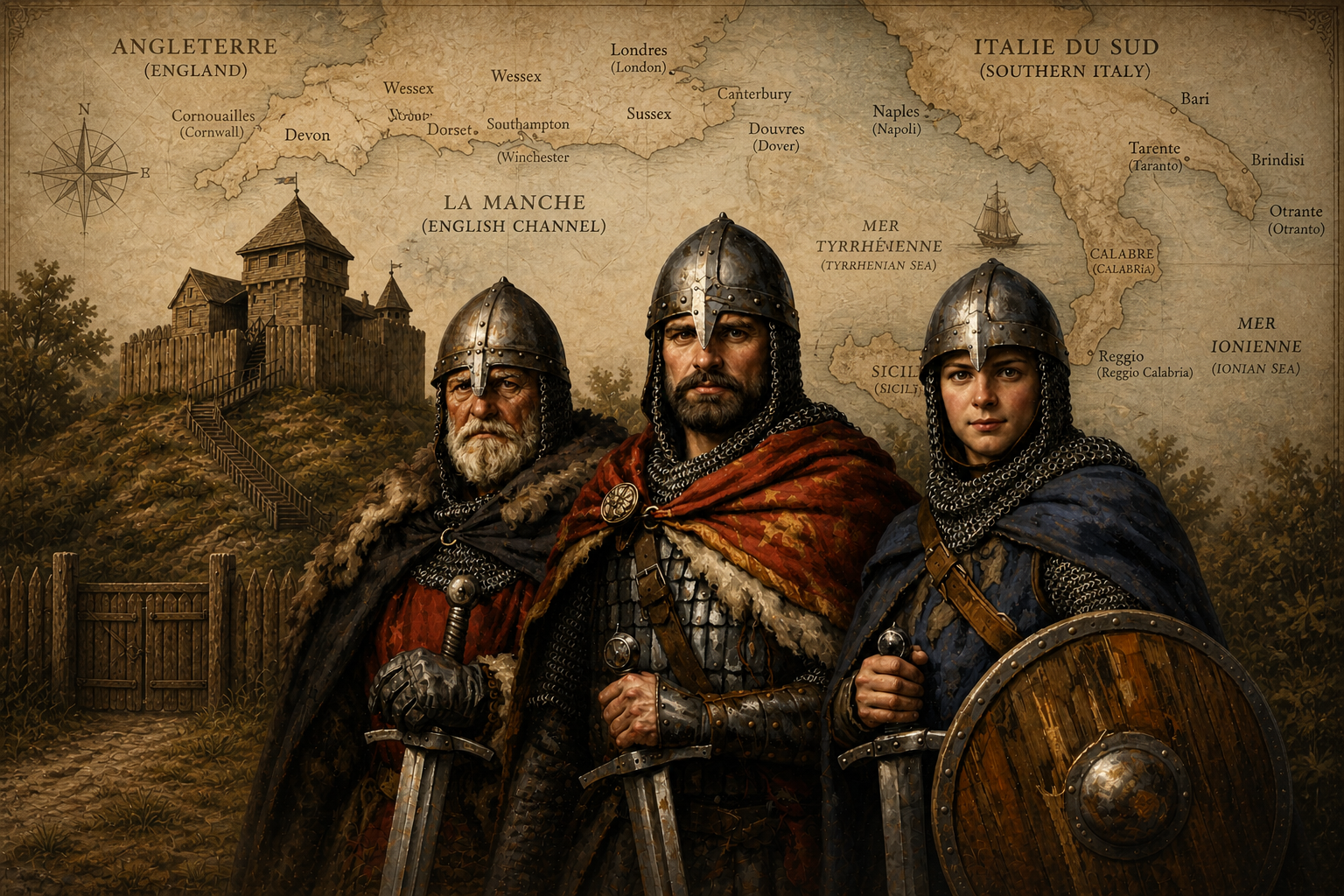
The Lords of Tosny rank among the most prominent Norman aristocratic families of the eleventh century. Deeply rooted in Normandy, they played an active role in the formation of the Duchy while also shaping the wider history of medieval Europe through their mercenary campaigns and settlements in Southern Italy, their military exploits in Spain, and their decisive participation in the Norman Conquest of England alongside William the Conqueror in 1066. (See Historical Overview.)

International Dimension

Launched in February 2025, the project is founded on an international cultural, scientific, and educational partnership bringing together:

  • Biblioteca Comunale Giovanni XXIII, San Vito dei Normanni (Italy);

  • Flamstead Parish Council, Flamstead (England);

  • The Heritage Trust, Middlewich (England);

  • Gilbert de Venables Cultural Centre, Commune of Les Trois Lacs, Normandy (France).

Designed as a travelling exhibition, it will tour all partner territories throughout 2027, strengthening cultural ties between the participating communities while enhancing the international visibility of Normandy as part of the European Year of the Normans 2027.

Theme and Historical Narrative

The Lords of Tosny embody one of the most emblematic examples of the medieval Norman nobility. Deeply rooted in Normandy, they distinguished themselves from the beginning of the eleventh century as mercenaries, conquerors, and frontier lords whose influence extended across Southern Italy, Spain, and England.

The exhibition traces the intertwined history of the Tosny family through the lives of three major historical figures:

  • Raoul I de Tosny, founder of the lineage, a close associate of the early Dukes of Normandy, who was exiled before becoming a mercenary in Southern Italy, where he fought alongside the Lombard princes against the Byzantine Empire.

  • Roger de Tosny, known as “Roger the Spaniard,” defender of Normandy’s southern frontier, who left to fight the Moors in Spain in the service of the Countess of Barcelona, earning a formidable military reputation.

  • Raoul II de Tosny, a loyal supporter of Duke William of Normandy, hero of the Battle of Mortemer (1054), architect of the alliance between the Lordships of Tosny and Venables, and a leading participant in the Norman Conquest of England in 1066 alongside Gilbert de Venables.

The exhibition also explores the relationship between the Lordship of Venables and the Barony of Tosny within the wider context of the emergence of feudal society in the Pagus Madriacensis, a frontier territory shaped by the rivalries and alliances between Frankish and Norman barons.

An original audiovisual narrative, presented through the voice of Alice de Toeni (1282–1325), offers a unique woman’s perspective on the remarkable exploits and legacy of her ancestors.

Through these intertwined destinies, the exhibition explores the themes of shared memory, the circulation of people, cultures, and knowledge, and demonstrates how medieval Normandy occupied a central place within the interconnected political and cultural landscape of eleventh-century Europe.

Associated Cultural Activities

Scenographic Design

In partnership with the Verrières Studio Cinéma École Association (AVSC), a bespoke scenographic production will enrich the exhibition through the story of Alice de Toeni, heiress of the Tosny lineage and the last representative of its senior branch. By giving Alice a voice, the exhibition offers a unique female perspective on the lives, achievements, and legacy of her ancestors.

Alice de Toeni was born between 1282 and 1285 in Flamstead, Hertfordshire. Through her paternal lineage, she belonged to one of the foremost aristocratic families of medieval England. She died on 8 January 1325. After three marriages, most of her estates and manors passed to her eldest son from her second marriage, Thomas de Beauchamp, who became the 11th Earl of Warwick.

Creation of a Historical Tapestry

A team of artists, historians, and volunteers is designing and producing a historical tapestry inspired by the spirit of the Bayeux Tapestry, while adopting a contemporary artistic approach. A series of embroidered panels will illustrate key episodes in the history of the powerful Norman Barons of Tosny and Conches, together with the arrival of a young lord at the Lordship of Venables.

The tapestry will serve as both an educational resource and the narrative thread linking a series of historical characters who recount the earliest connections between the Barony of Tosny and the Lordship of Venables, while illustrating the everyday lives of men and women at the beginning of the second millennium.

Through its visual and narrative qualities, the tapestry will become a central feature of exhibitions and cultural events. It is intended as an educational resource for schools, providing support for teaching medieval history while helping to place Tosny and Venables within the broader story of the emergence of Norman feudal society.

Editorial Project

The project also includes the publication of an expanded and updated edition of Normans at Middlewich and Venables, co-authored by T. Strickland and P. Lequette (original edition, 2008). Revised in the light of recent historical and archaeological research, this new edition will serve as the scientific catalogue accompanying the exhibition.
error: Le contenu de ce site est protégé !